Can You Install Wheels with a Different Center Bore Diameter?
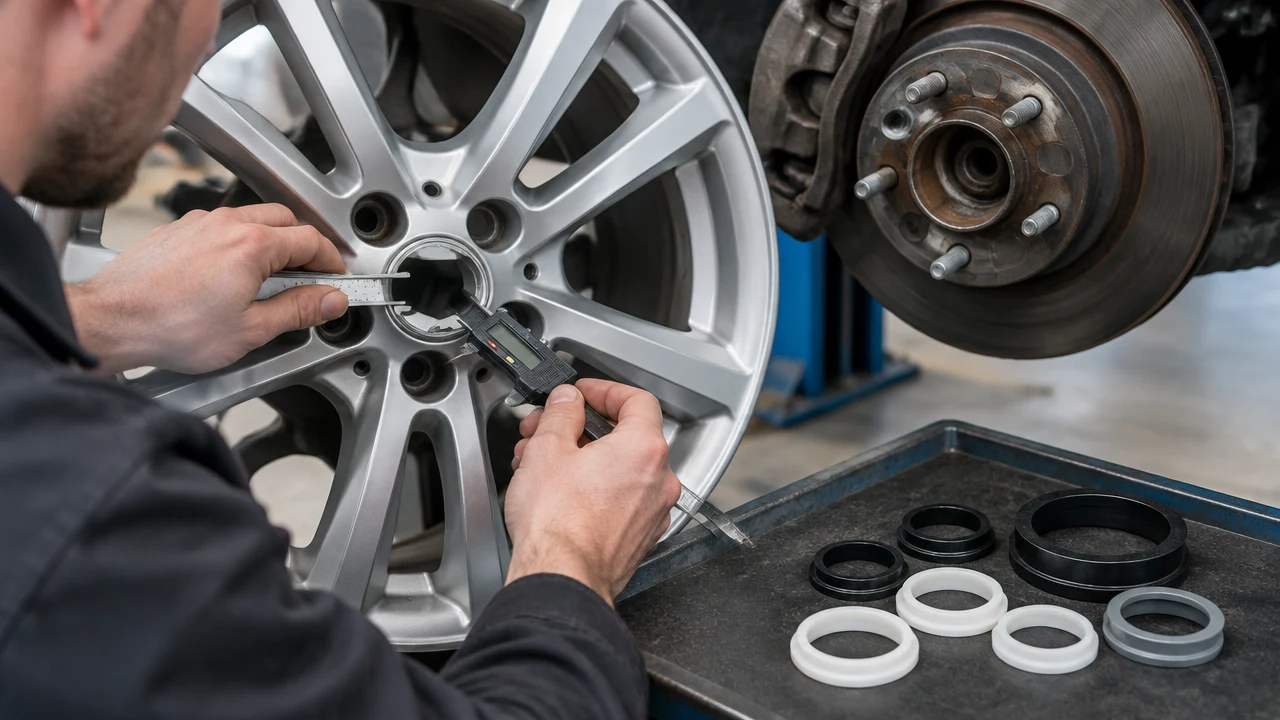
You can usually install a wheel with a larger center bore if you choose the right hub-centric ring. If the bore is smaller than the hub, the wheel will not fit, and machining the bore is not always permissible. But matching the center bore diameters is not enough: you also need to check the bolt pattern, offset, wheel width, lug hardware, and clearances to the brakes and suspension.
The center bore is the hole in the middle of the wheel that fits over the hub’s raised pilot. Catalogs often list its size as DIA or CB (center bore), while the diameter of the hub pilot is called the hub diameter. For example, a measurement of 66.6 mm refers to the wheel’s center bore, not its outside diameter. For a wheel to fit without adapters, the sizes must match, taking into account tolerances and the specific vehicle’s design.
Why a wheel needs the right center bore size
The center bore helps position the wheel correctly during installation. When it matches the hub, the wheel is easier to install straight, and the lug holes line up. How the connection is designed depends on the vehicle: in some cases, the lug nuts or bolts provide much of the clamping force and centering, while in others the wheel is designed to fit snugly over the hub pilot. So you cannot assume the center bore size is unimportant just because you were able to bolt the wheel on.
A mismatch can make installation difficult or result in improper seating. If the wheel does not sit flush against the hub’s mounting face, the lug hardware may not tighten evenly. If the bore is significantly larger than the hub pilot, the wheel may shift off-center during installation. Possible consequences include vibration, wheel runout, and extra stress on the lug hardware. However, a gap by itself does not prove that the wheel will necessarily vibrate: the result depends on the wheel’s design and how it is centered.
If the wheel’s center bore is larger than the hub
This is a common situation when installing universal-fit or aftermarket wheels. For example, a vehicle’s hub pilot has a diameter of 60.1 mm, while the center bore of the wheel you’ve chosen is 67.1 mm. That leaves a 7 mm difference in diameter. A hub-centric ring is usually used with this combination. Its outer diameter matches the wheel’s bore, and its inner diameter matches the hub: in this example, the ring should measure 67.1 and 60.1 mm.
The ring fills the gap and helps center the wheel on the hub during installation. It does not change the bolt pattern, offset, or mounting face, and it cannot correct incompatibility in those areas. The part must match the specific dimensions and shape of the mounting surface; choosing a ring with “approximately the same diameter” is not enough.
Hub-centric ring materials
Rings are made of plastic and metal, including aluminum alloys. Plastic rings are usually simpler and less expensive; metal rings may be useful in high-temperature conditions and when wheels are changed frequently. But the material does not make up for an incorrect size or poor fit. The ring should not wobble, sit crooked, or prevent the wheel from sitting flush against the hub. Before installation, check that it is undamaged, undeformed, and oriented correctly.
A hub-centric ring is not a spacer. It should not increase the offset or leave a gap between the mounting faces. When tightened, the wheel must sit flush against the hub. If the ring prevents this, its design or dimensions are unsuitable.
If the wheel’s center bore is smaller than the hub
A wheel with a bore smaller than the hub pilot usually cannot be installed: the pilot physically will not fit through the bore. Trying to pull the wheel into place with the lug bolts or nuts is dangerous—the hardware may be damaged, and the wheel will not sit flush. A hub-centric ring will not help here because it only reduces excess clearance; it cannot enlarge the bore.
Sometimes the center bore can be machined at a specialized shop. This is acceptable only after checking the wheel’s design and confirming that there is enough material around the bore. You cannot assume in advance that machining is safe for every cast or forged wheel: the modification may weaken the hub mounting area, damage the finish, or violate the manufacturer’s requirements. Before machining, get an assessment from a specialist rather than drilling out the wheel yourself.
If the manufacturer does not allow the center bore to be modified, or the shop cannot confirm that the work is safe, it is wiser to choose a wheel with the correct size. Take extra care with wheels that have an unusual center-section design and products with unclear information about the model and approved specifications.
How to check compatibility before buying
First, find the exact specifications for the vehicle and wheel. Original equipment specifications may be listed in the owner’s manual, on the vehicle’s placard, or in the official catalog. It is also useful to check the dimensions of the parts actually installed: a previous owner may have fitted aftermarket wheels or hubs.
Measure or confirm the hub pilot diameter and compare it with the wheel’s center bore. For an accurate result, use an appropriate measuring tool and the manufacturer’s specifications.
Check the bolt pattern: the number of lug holes and the diameter of the circle they form. A matching center bore does not make a wheel with a different bolt pattern compatible.
Check the wheel width and offset. The wrong offset can cause the wheel to contact the suspension or extend beyond the bodywork.
Confirm the type and size of the lug hardware: the seat type, thread, bolt length, or lug nut specifications. Hardware for a ball-seat wheel does not always fit a wheel with conical seats.
Make sure the wheel does not contact the brake caliper or suspension components, and that the tire size is suitable and does not rub the body when turning or as the suspension moves.
It is useful to consider the specifications together: PCD describes the lug pattern, DIA is the center bore, ET is the offset, and width is listed separately. For example, a matching DIA does not compensate for an incorrect PCD, and a hub-centric ring cannot correct an offset that is too large or too small. If in doubt, check the complete set of specifications instead of choosing a wheel based on a single measurement.
What to check after installation
Before installation, clean dirt and loose corrosion from the hub and wheel mounting surfaces. Dirt or a burr can prevent the wheel from sitting flush even when the center bore size is correct. Then check that the wheel sits evenly, the ring does not protrude between the mounting faces, and the lug hardware is correct for the wheel and vehicle. Tighten the lug bolts or nuts in the sequence and to the torque specified by the vehicle or wheel manufacturer.
After installation, watch for unusual vibration, wheel runout, and strange noises. If any occur, stop and check the wheel’s fit, lug torque, balance, and the condition of the components. Do not try to fix the problem by randomly choosing rings or overtightening the lug hardware. The wheel must be installed correctly, and all its specifications must meet the vehicle’s requirements.
Quick summary
Center bore larger than the hub — a properly sized hub-centric ring is usually used, provided the wheel’s other specifications are compatible.
Center bore smaller than the hub — do not force the wheel into place; consider machining only after a professional assessment.
A ring does not change the bolt pattern, offset, width, lug hardware, or brake clearances.
Before driving, make sure the wheel is seated flush and the lug hardware is tightened correctly.
In short, a different center bore diameter does not always mean you have to rule out a wheel. A larger bore can often be accommodated with a precisely matched ring; a smaller bore may make installation impossible without modifying the wheel. Make the final decision based on the full set of specifications and the manufacturer’s requirements, not just on whether the diameters match.